









Why Carbon Nanotube Dispersion Is Difficult in Modern Manufacturing
Carbon nanotubes (CNTs) have become important materials in lithium batteries, conductive coatings, electronic materials, and advanced composites because of their excellent electrical conductivity and mechanical properties.
However, manufacturers often face a critical challenge during production:
How can carbon nanotube agglomeration be broken down while maintaining stable dispersion performance?
Carbon nanotubes naturally tend to form clusters because of strong intermolecular forces. Traditional mixing equipment may achieve initial blending, but it often cannot provide enough shear energy to achieve uniform nano-scale dispersion.
Common production problems include:
- Uneven carbon nanotube distribution
- Poor electrical conductivity performance
- Particle agglomeration after storage
- Excessive processing temperature
- Difficulty maintaining batch-to-batch consistency
The Carbon Nanotube Sand Mill is designed to solve these challenges by combining high-energy grinding, precise bead control, and advanced temperature management.
How Does a Carbon Nanotube Sand Mill Improve Dispersion Performance?
The biggest challenge in CNT processing is not simply mixing materials together. The key requirement is creating a stable dispersion system where nanotubes are evenly distributed throughout the slurry.
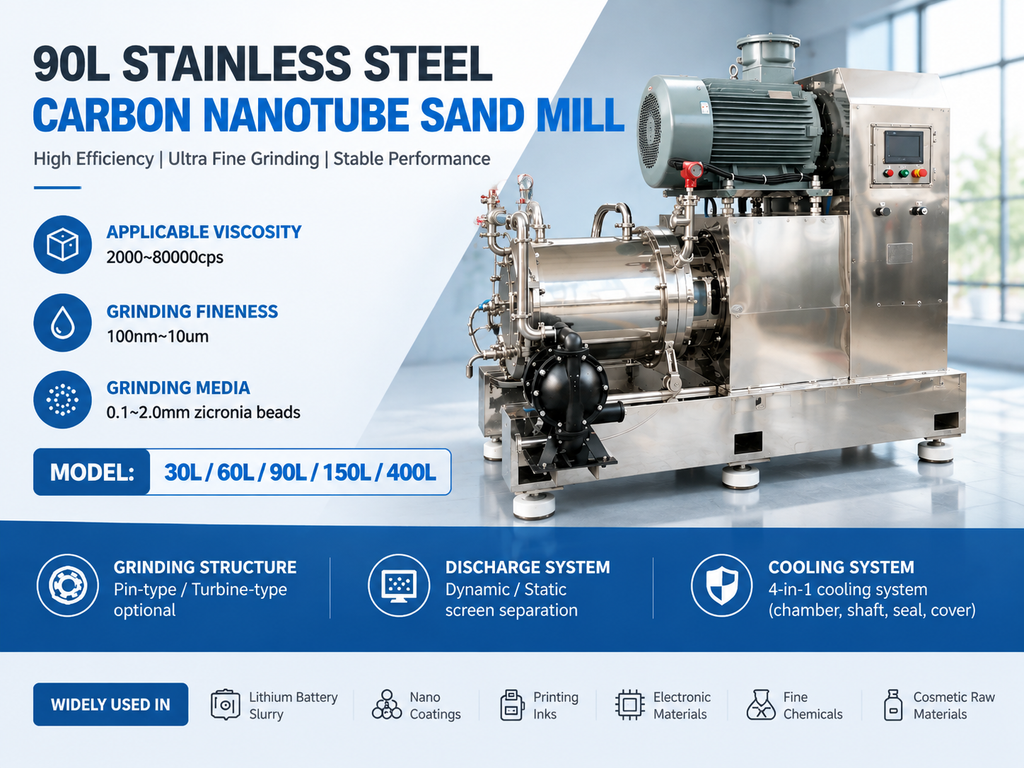
The Musehn Carbon Nanotube Sand Mill uses advanced bead milling technology to generate intensive shear and impact forces between zirconia beads and material particles.
This process helps:
- Break down carbon nanotube agglomerates
- Improve material uniformity
- Increase dispersion stability
- Achieve consistent product performance
Compared with conventional mixers, a sand mill provides much higher energy density in a controlled grinding chamber.
Solving Agglomeration Problems with Nano Grinding Technology
Problem: Carbon Nanotube Clusters Reduce Material Performance
In battery slurry and conductive paste production, CNT clusters can create:
- Uneven conductive networks
- Lower energy efficiency
- Poor coating uniformity
- Reduced final product quality
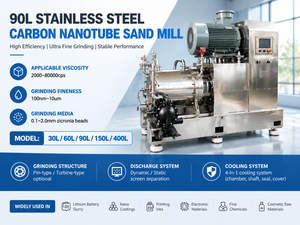
Solution: Precision Grinding from 100nm to 10μm
The Carbon Nanotube Sand Mill supports ultra-fine grinding performance with a fineness range of:
100nm–10μm
Using zirconia grinding media from:
0.1–2.0mm
the machine provides efficient particle impact and shear force to improve nano-scale dispersion.
Solving High-Viscosity Material Processing Challenges
Problem: High Solid Content Slurry Is Difficult to Process
Many advanced material applications involve high-viscosity formulations.
Examples:
- Lithium battery slurry
- Conductive carbon paste
- Functional coatings
- Electronic materials
High viscosity can cause:
- Poor material circulation
- Uneven grinding
- Increased energy consumption
Solution: Stable Processing up to 80,000 cps
The Carbon Nanotube Sand Mill is designed for materials with viscosity from:
2,000–80,000 cps
The optimized grinding chamber design improves slurry movement and maintains stable dispersion even under demanding processing conditions.
Preventing Thermal Damage During Continuous Grinding
Problem: Nano Grinding Generates Excessive Heat
During high-speed grinding, mechanical energy converts into heat.
For sensitive materials such as battery slurry and electronic materials, excessive temperature may affect:
- Chemical stability
- Dispersion quality
- Product performance
Solution: 4-in-1 Cooling System
The Carbon Nanotube Sand Mill integrates a complete cooling system covering:
- Grinding chamber
- Shaft
- Mechanical seal
- Cover
This design helps maintain stable temperature during continuous operation and protects heat-sensitive formulations.
Reducing Contamination Risks in Battery Material Production
Problem: Metal Contamination Affects Advanced Materials
Battery and electronic material manufacturers require strict contamination control.
Metal impurities may influence:
- Battery safety
- Electrical performance
- Product reliability
Solution: Flexible Material Contact Options
The Carbon Nanotube Sand Mill can be customized with different contact materials:
Zirconia
For high-purity applications requiring low contamination.
Silicon Carbide (SiC)
For excellent wear resistance and demanding processing conditions.
Polyurethane (PU)
For chemical resistance and abrasive materials.
Carbon Nanotube Sand Mill Technical Specifications
| Parameter | Specification |
|---|---|
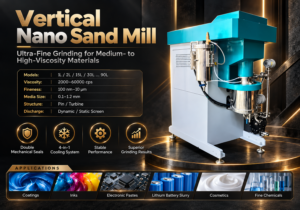
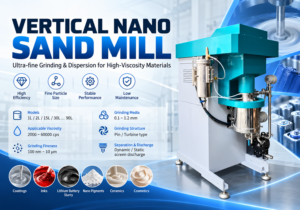
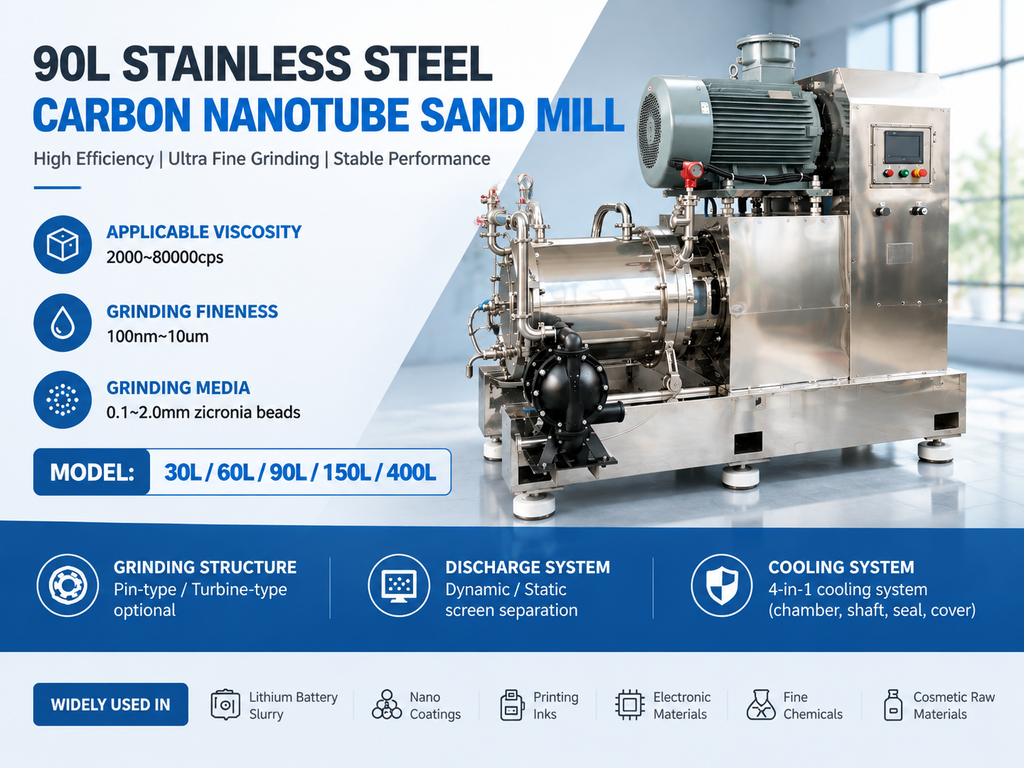
| Model | 30L / 60L / 90L / 150L / 400L |
| Applicable Viscosity | 2,000–80,000 cps |
| Grinding Fineness | 100nm–10μm |
| Grinding Media | 0.1–2.0mm Zirconia Beads |
| Grinding Structure | Pin Type / Turbine Type |
| Separation System | Dynamic / Static Screen Separation |
| Cooling System | 4-in-1 Cooling System |
Applications of Carbon Nanotube Sand Mill
Lithium Battery Slurry
Used for improving:
- Conductive carbon dispersion
- Electrode slurry consistency
- Material stability
Nano Coatings
Helps achieve:
- Uniform nano particles
- Better coating performance
- Improved stability
Printing Inks
Supports:
- Pigment dispersion
- Color consistency
- Fine particle processing
Electronic Materials
Suitable for:
- Conductive materials
- Functional materials
- Advanced chemical formulations
Fine Chemicals and Cosmetic Materials
Provides:
- Stable dispersion
- Controlled particle size
- Improved formulation quality
Why Choose Musehn Carbon Nanotube Sand Mill?
When producing advanced nano materials, manufacturers need equipment that can solve three core problems:
- How to achieve stable nano dispersion?
→ High-energy bead milling technology improves particle distribution. - How to process difficult high-viscosity materials?
→ Optimized grinding structure supports up to 80,000 cps materials. - How to maintain product quality during continuous production?
→ 4-in-1 cooling and reliable sealing systems ensure stable operation.
The Musehn Carbon Nanotube Sand Mill provides a complete solution for manufacturers looking to improve dispersion efficiency, production stability, and final product performance.
Improve Your Nano Material Processing
If your production process suffers from CNT agglomeration, unstable dispersion, or overheating problems, selecting the correct grinding technology is essential.
Musehn provides customized sand mill solutions for carbon nanotube materials, battery slurry, coatings, inks, and advanced chemical applications.
Visit www.sandmillms.com to learn more about nano grinding solutions or contact our engineering team for material testing.